
EVERY LOT EARNS ITS RELEASE
How a lot is documented, tested and released — and what happens to a lot that misses specification.
8 release tests per lot Third-party verified −20 °C cold chain Off-spec lots not sold01 — THE LOT JOURNEY
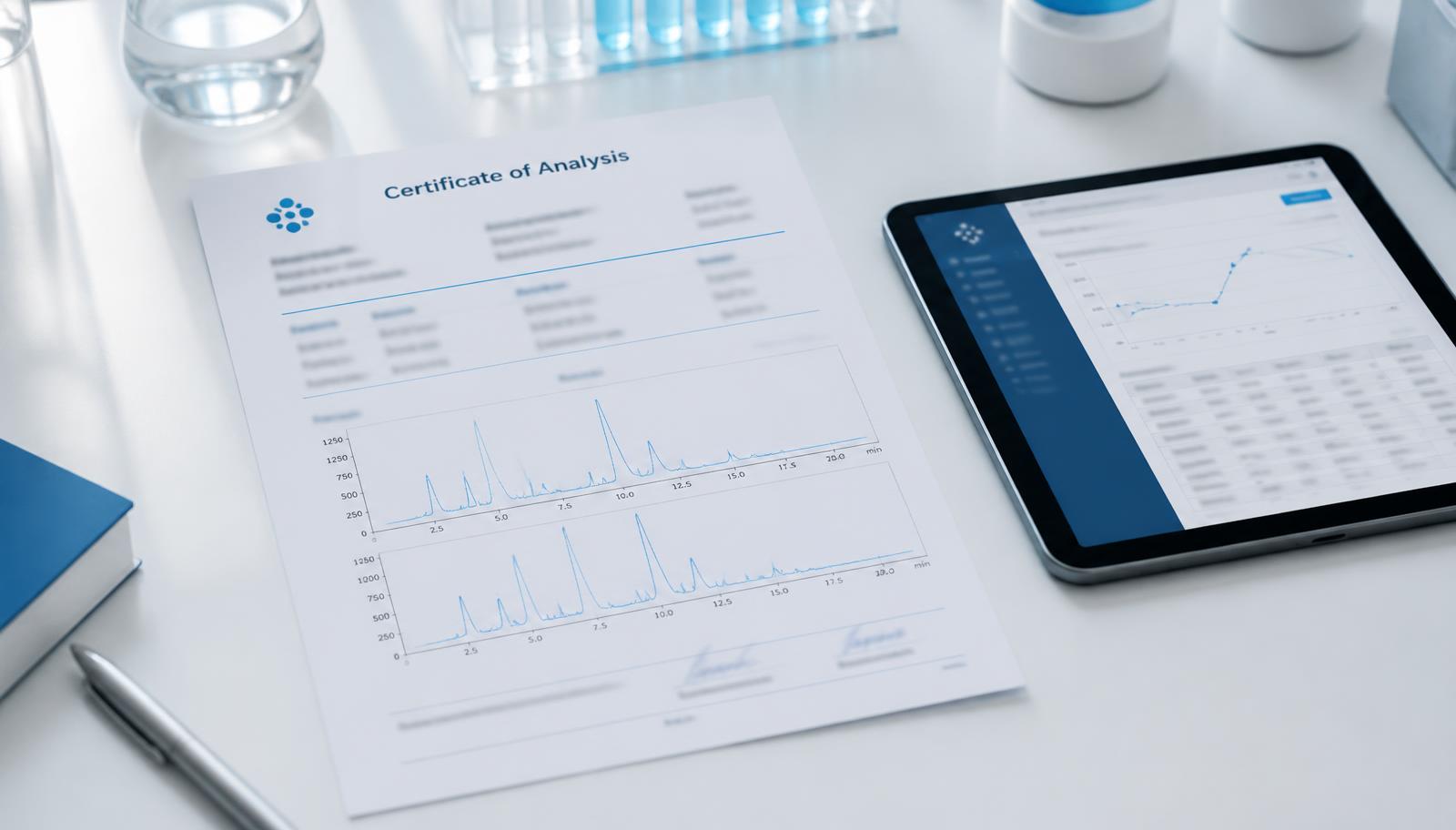
From documentation to released lot
Six steps, one lot number. Every step writes something to the lot record — and the record travels with the vial.
Documentation received
Each incoming lot arrives with its supplier documentation, which is recorded against the lot before anything else happens.
✓ LOT RECORD · Documentation on file
Lot recorded and labelled
Compound, quantity, fill and lot number are recorded, and vials carry the lot number that traces through every step below.
✓ LOT RECORD · Lot number assigned
Independent sampling and submission
Samples are drawn from the lot and submitted to independent U.S. laboratories for the release panel that applies to that compound.
✓ LOT RECORD · Samples submitted
Results reviewed against specification
Returned results are reviewed against the applicable specification — purity, identity and the safety assays included in that lot’s panel.
✓ LOT RECORD · Results reviewed
Certificate of Analysis published
The lot’s certificate is published to the COA library under the lot number printed on the vial, so it can be read before purchase.
✓ LOT RECORD · COA published
THE GATE ↓
Release testing and quarantine
The lot is held in quarantine until its release results are in. Anything failing specification is not offered for sale, and is never downgraded and sold as a lower grade.
✓ LOT RECORD · Release results on file
One lot number, end to end
The number on your vial traces back through every record above — and forward to its COA.
02 — THE RELEASE GATE
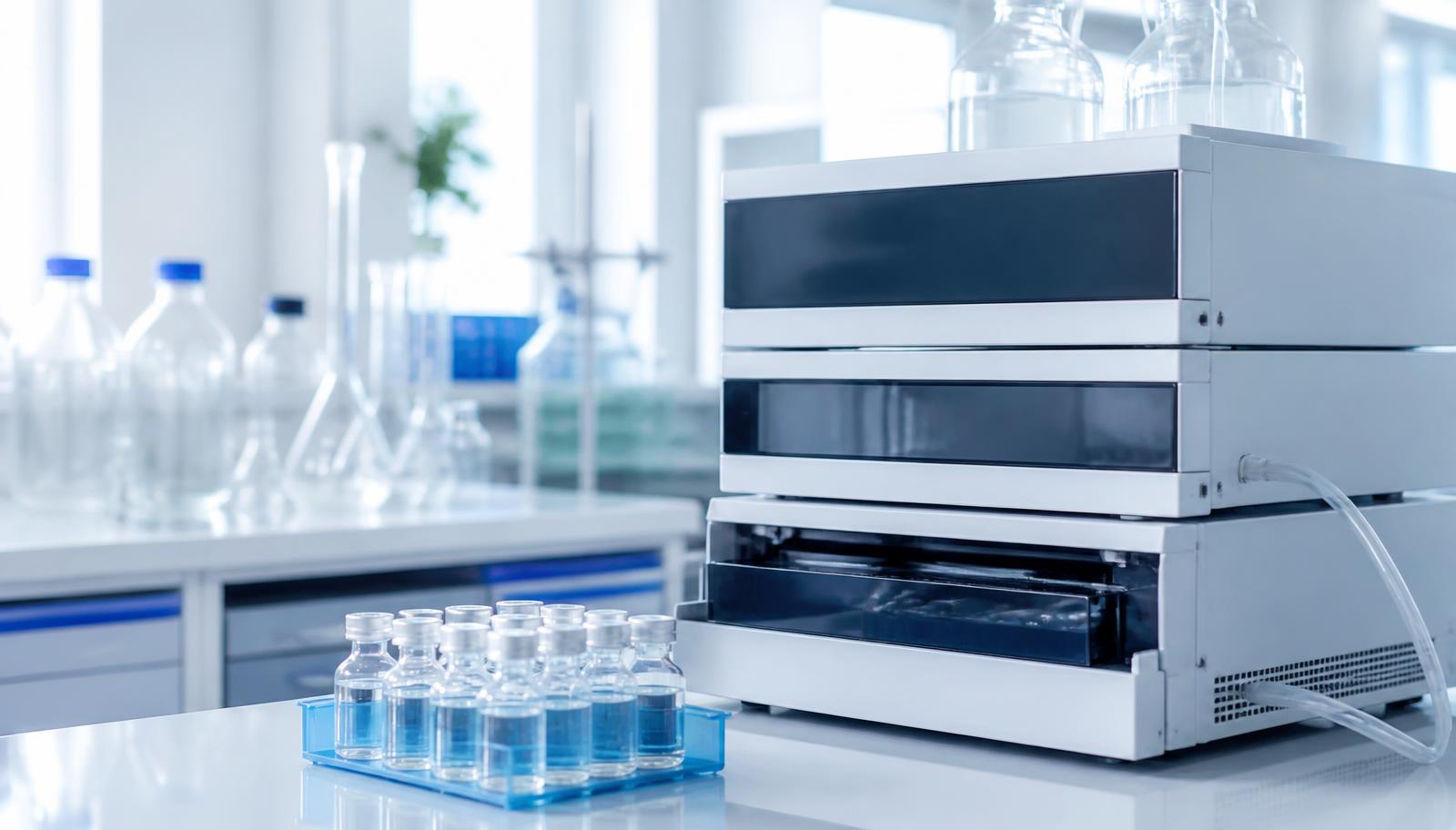
No lot ships until its release results are in.
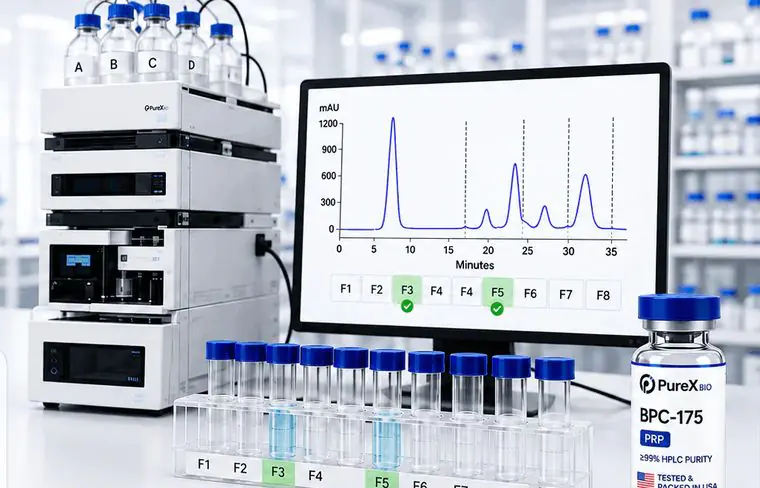
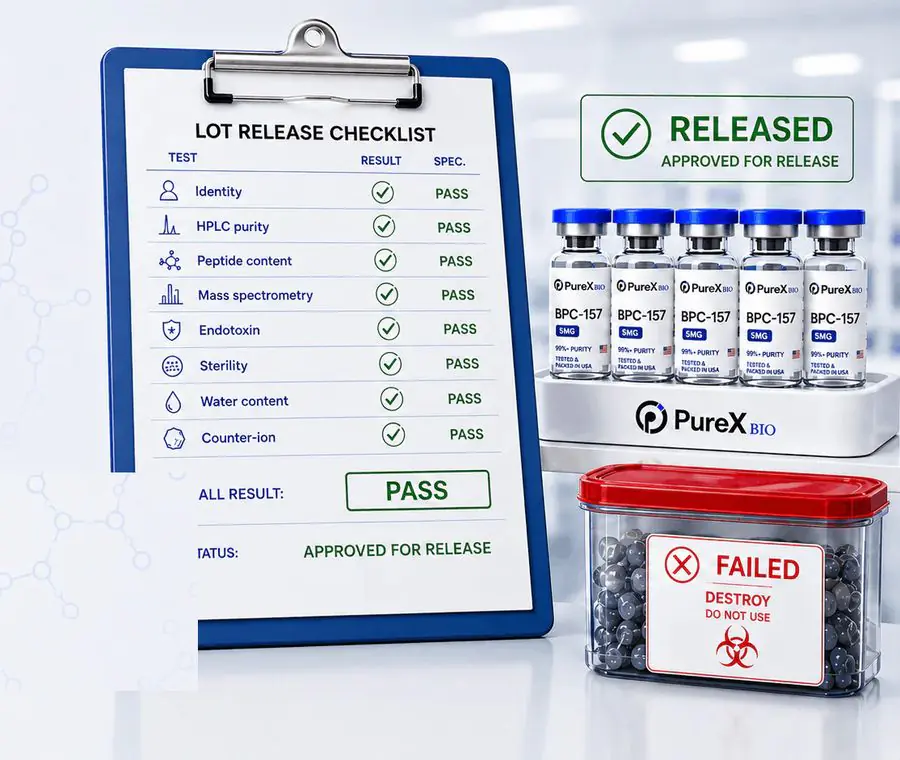
Every finished lot sits in quarantine while its independent release panel comes back. A pass on every test in that lot’s panel releases it; one failure ends it. Testing varies by lot — the Certificate of Analysis lists exactly what was run.
01
Identity
Matches the target compound
02
HPLC purity
Main peak ≥ 98.0% (RP-HPLC)
03
Peptide content
True peptide mass fraction
04
Identity verification
Compound confirmed by LC-MS
05
Endotoxin
≤ 0.05 EU/mg (LAL)
06
Sterility
USP <71>, no growth
07
Total yeast & mold
Within limits (USP <61>/<62>)
08
Heavy metals & pH
Within limits (ICP-OES) · pH 5.0–8.0
A failing lot is never downgraded and sold as a lower grade.
If a lot misses specification, it does not become a discount listing. It is rejected and not offered for sale.
03 — COLD CHAIN & STORAGE
−20 °C from release to your door
Finished vials are held at −20 °C, desiccated and protected from light, from the moment they are released until the moment they are packed.
Released to storage
−20 °C, desiccated, protected from light.
Packed
Moulded tray inside an insulated shipper with a frozen gel pack.
In transit
The shipper is engineered to hold temperature through the transit window — not to act as storage.
On arrival
Material should move to a freezer on arrival.
A STRAIGHT ANSWER
Lyophilised peptide is comparatively robust in transit, and a gel pack that has thawed on arrival does not by itself indicate a problem.
04 — FULFILLMENT & VERIFICATION
USA
Fulfilled from the USA
Released lots are stored, packed and shipped from our US fulfillment facility.
LOT BY LOT
Tested by lot
Each lot is tested and documented individually. Results are never carried over from another lot.
RD PARTY
Independently verified
Release results are verified by independent third-party testing, lot by lot.
Judge the data yourself.
Every released lot ships with its numbers. Pull the COA before you buy.
FOR LABORATORY RESEARCH USE ONLY
Run your next study on verified material
Browse the catalogue, pull any lot's Certificate of Analysis, and see what documentation changes.